A Chilling Example of Non-compliance with Rule 19
Introduction
On 29 June 2016 in Halifax Harbour there was a close-quarters crossing of a tour boat, Summer Bay, just below the bow of the cruise ship Grandeur of the Seas. Although there was no collision and no loss of life, the incident led to an investigation by the Transportation Safety Board.
The findings from the investigation provide a valuable warning about complying (or not) with the Collision Regulations during periods of restricted visibility.
The Situation
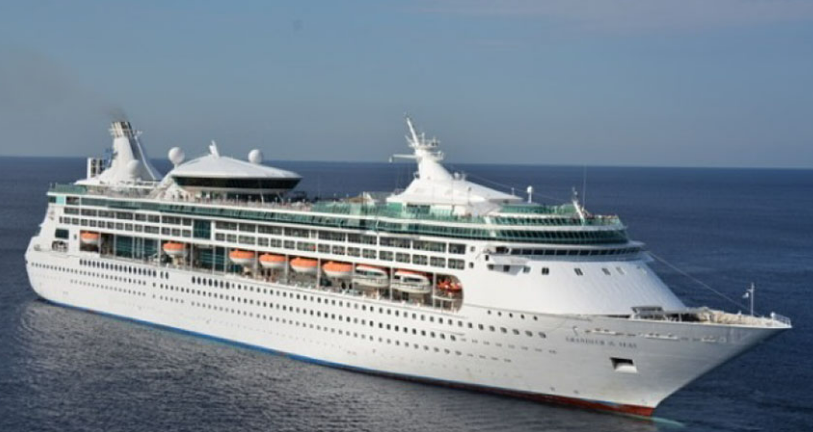 At the time of the incident the visibility was 100 to 200 m due to thick fog. Grandeur of the Seas was entering Halifax Harbour northbound from the south at 10 knots. The cruise ship had about 2770 people on board.
Grandeur of the Seas was keeping to the agreed course within the traffic separation scheme for the harbour. She was in contact with the radio operators for Halifax Traffic Control.
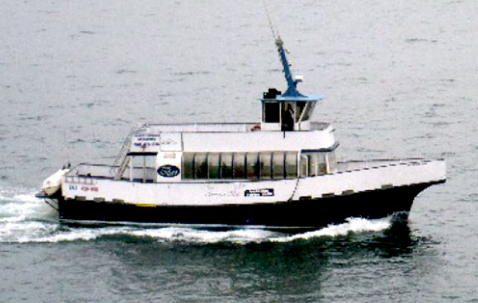 Summer Bay was taking 35 passengers on a tour of the harbour and heading in a southerly direction at about 7.5 knots.
The two vessels had made radio contact. Summer Bay agreed to keep west of the intended course of Grandeur of the Seas. Thus they agreed to pass port to port.
In spite of the the agreement on passing, the master of Summer Bay made a sharp turn to port thinking, erroneously, that he had a dangerous radar contact on his starboard bow. Summer Bay passed across the path of Grandeur of the Seas with a separation of about 25 m (!) from the bulbous bow of the cruise ship.
Findings
The incident report has several findings of fault, including violations of the Collision Regulations.
For members of Station 60 we should attend to findings that crew on Summer Bay should have been more familiar with and better trained on the use of radar. How are we doing on that?
One finding relevant to this COLREGS course is: "While Rule 19 advises all vessels to avoid altering course to port for a vessel forward of the beam, the master of the Summer Bay altered course to port and crossed the bow of the Grandeur of the Seas."
Given the considerable difference between the size of the two vessels, a collision would have been catastrophic for the 39 people on board Summer Bay. Had Summer Bay not made its turn to port, it would have avoided this incident entirely (although there were other contributing faults found).
Summary
This is a particularly chilling example of a failure to follow Rule 19(d)(i). Namely that, when a "vessel which detects by radar alone the presence of another vessel" it should avoid "an alteration of course to port for a vessel forward of the beam".